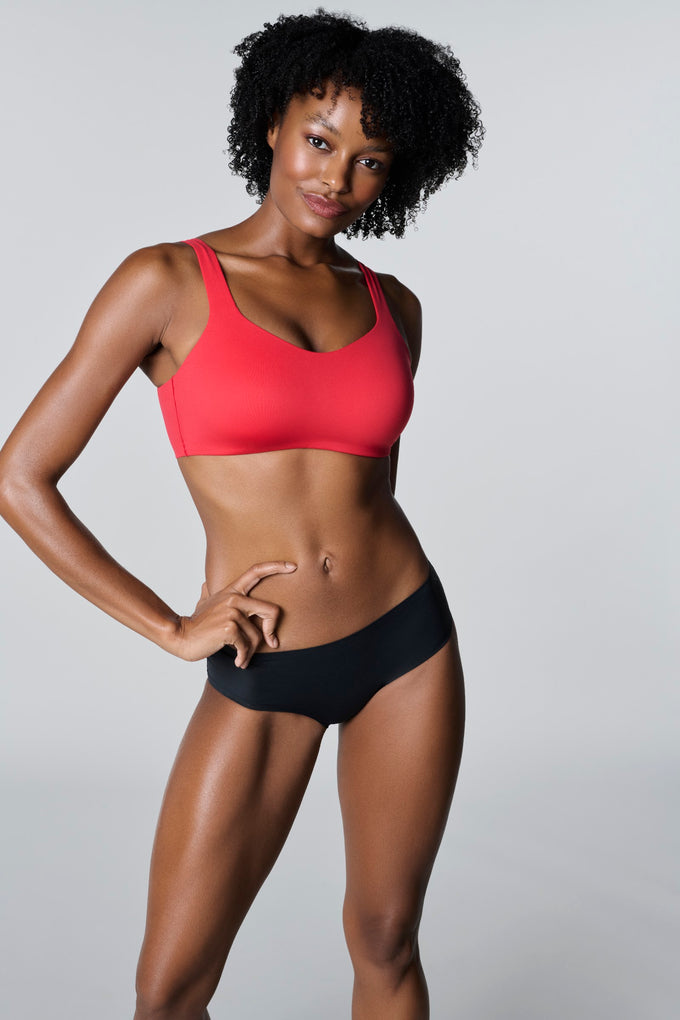
The Wireless Racerback Bra: Why the Back Matters as Much as the Cup
Most bra shopping starts and ends with the cup, band size, underwire or not, padding or none. The back strap configuration barely gets a mention, until it's the thing bothering you by midafternoon. A racerback isn't just a style choice for certain necklines. It changes how weight gets distributed across your shoulders and back entirely, which matters whether you're wearing a tank top or a full sleeve.
What a Racerback Actually Does Differently
Standard straps sit parallel, each one carrying its share of the load straight down over the top of the shoulder. A racerback angles the straps in toward the spine, meeting in a Y or T shape between the shoulder blades. That changes the geometry of how weight sits on the body, pulling in and back rather than straight down, which is part of why racerback styles often feel more secure during movement, there's less room for a strap to slide off a shoulder when it's angled inward instead of sitting on the outer edge.
Where Wireless Changes the Equation
Underwire and a racerback back panel don't always play well together. Wire is built to sit flat against the ribcage in a fixed position, and a racerback's angled straps pull the whole structure in a different direction, which can create pressure points wire wasn't designed to accommodate. A wireless construction, especially one built with a supportive band and structured cups like EnMeshed Tech instead of a rigid frame, moves with that angled strap geometry instead of fighting it.
Not Just for Tank Tops
Racerback styles get pigeonholed as workout-and-tank-top-only, but the strap benefit applies any time you're layering, reaching overhead, or on your feet for a long stretch. The Daily Racerback is built on the same construction as Huug's other everyday styles, no underwire, no removable pads, machine washable and dryer safe, just with the back panel doing double duty for anyone who wants the strap security regardless of what's on top.
What to Look For in a Wireless Racerback
Strap width matters here more than in a standard bra, since a racerback concentrates the pull point differently. Wider straps at the point where they angle inward reduce the digging-in feeling that a thin strap creates under sustained pull. Band support matters just as much, since a wireless racerback needs the underband doing the structural work that wire would otherwise handle. Get both right and the racerback advantage, less shifting, less slipping, shows up during a full day, not just a workout.
How the Daily Racerback Compares
"Racerback" is as much an activewear term as an intimates one, so the real comparison set isn't just other wire-free comfort brands, it includes the activewear names people usually think of first: Lululemon's Energy Bra and Enlite, and Knix's Catalyst and Evolution styles. Both are reasonable picks built specifically for workouts, with foam or molded lining for impact support, a different design goal than an everyday, all-day wireless bra. For the full brand-by-brand breakdown against that wider set, see Best Racerback Bra: Top Picks for Everyday Wear and Active Days. The construction is built on the same EnMeshed Tech foundation as the rest of the Huug line, so the same comparisons apply beyond racerback specifically: Huug vs. Knix and Huug vs. Honeylove both break down the foam-vs-mesh construction difference that determines how a bra, racerback or otherwise, actually holds up over months of wear and washing.
Daily Racerback at a Glance: How the Construction Compares
Most wire-free racerback-style bras on the market, including Knix and Honeylove, build support through molded or foam cups. The Daily Racerback takes a different structural approach. Here's how the construction actually differs on the points that matter for a racerback specifically:
| What You're Comparing | Huug Daily Racerback | Typical Foam-Cup Racerback (e.g. Knix) | Typical Shaping-Foam Wire-Free (e.g. Honeylove) |
|---|---|---|---|
| Support construction | EnMeshed Tech bonded mesh pads, non-removable, no underwire | Molded or foam cups, no underwire | Foam-forward shaping cups, no underwire |
| Pad type | Bonded in, nothing to remove or misplace | Varies by style, often removable or sewn-in foam | Molded foam, built for a sculpted silhouette |
| Care instructions | Machine wash and dryer safe, no delicate cycle needed | Foam-cup construction commonly calls for hand-wash or air-dry | Foam-cup construction commonly calls for hand-wash or air-dry |
| Strap/back style | Adjustable racerback straps, extended longline underband | Varies by style and line | Varies by style and line |
| Fit system | Standard sizing with a fit tip (true to size for all-day wear, size down for high-movement days) | Size-inclusive numeric band/cup range | Shapewear-adjacent sizing |
| Price | See current price on the Daily Racerback product page | Check current pricing direct with the brand | Check current pricing direct with the brand |
The pattern holds across the category: foam-cup construction, racerback or not, is the reason most wire-free bras carry hand-wash or air-dry instructions. EnMeshed Tech was built specifically to remove that constraint.
Frequently Asked Questions
What does a racerback bra do differently than a standard strap bra?
A racerback angles the straps inward to meet between the shoulder blades instead of running straight over each shoulder. That changes how weight distributes, pulling in and back rather than straight down, which reduces slipping and gives more strap security during movement.
Can a racerback bra be wireless and still supportive?
Yes, though the construction matters. Underwire and angled racerback straps don't always align well, since wire is built to sit in a fixed position that a racerback's geometry can work against. A wireless build with real structure in the band and cups, rather than a rigid frame, can move with that angled strap design instead of creating pressure points.
Is a racerback bra only for workouts and tank tops?
No. The strap-security benefit of a racerback applies any time you're moving, reaching, or on your feet for long stretches, not just during exercise. It's a back-support construction choice that works under regular clothing as much as activewear.
Why do my bra straps slip off my shoulders?
Standard straps sit at the outer edge of the shoulder, which gives them room to slide, especially during movement or with certain body types. A racerback's inward angle removes that outer edge slide point entirely, which is the main reason it tends to stay put better than a standard strap configuration.
What should I look for in a wireless racerback bra?
Strap width at the point where it angles inward, since that's the concentrated pull point in a racerback design, and real band support, since a wireless racerback needs the underband to do the structural work underwire would otherwise handle.