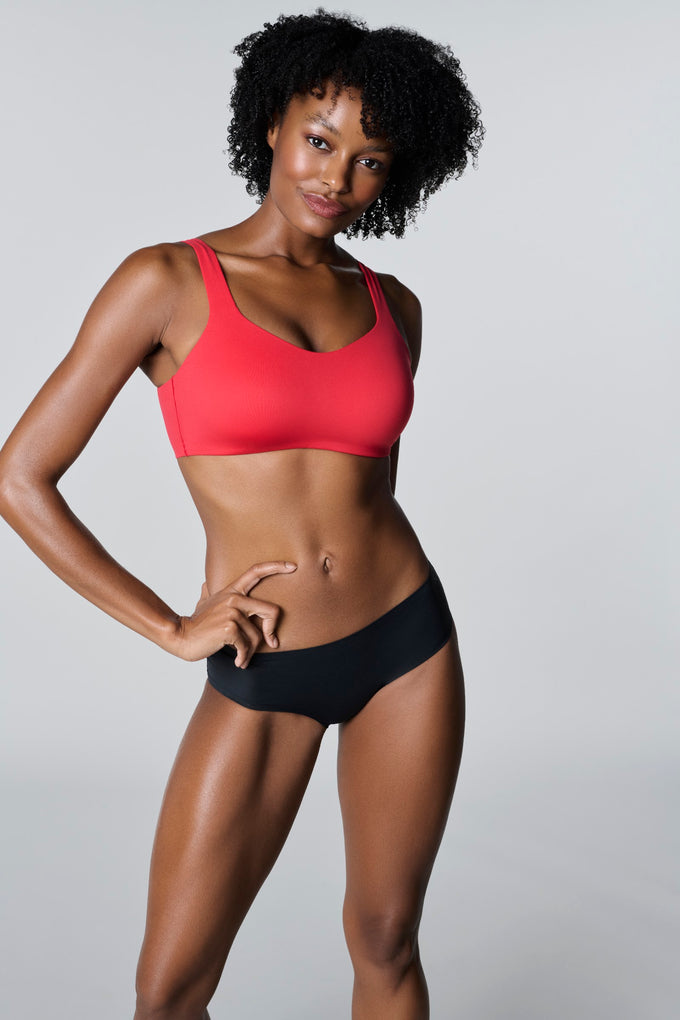
Be honest. When was the last time you really thought about how your bra fits?
If you are here asking “how do I know if my bra fits,” you are already ahead of most women. Seriously. Most of us throw on a bra, hope for the best, and spend the rest of the day adjusting, tugging, or counting the minutes until it comes off. If that sounds familiar, welcome. You are not broken. Your bra probably just does not fit.
The good news: fit issues are fixable once you know what to look for.
Hi, I’m Jen
I’m Jen, the co‑founder of HUUG, a mother of three daughters, and a technical bra designer with over 25 years of experience designing bras for major intimate brands around the world.
HUUG was born out of pure frustration with this industry. After decades of designing bras and fitting hundreds of bodies, I realized something wild: almost no women love their bras, and almost no one knows why they are uncomfortable.
Women have been taught to settle. Uncomfortable bands, digging straps, stiff cups, and laundry rules that belong in another decade. Cmon now, it took us this long for someone to design a washer and dryer safe bra? I wanted to build something better. In a perfect world, your bra is comfortable, supportive, and not something you think about all day. That is the bra I set out to create. One I genuinely enjoy wearing, and one I feel good handing to my daughters as they navigate their own relationship with bras.
Before we talk solutions, let’s figure out your fit. Because you cannot fix what you cannot identify.
Below is a complete, no‑nonsense guide to knowing if your bra fits correctly, written by someone who has spent her entire career obsessed with the details.
How Do I Know If My Bra Fits Correctly?
You can tell if your bra fits by checking five things: the band, the straps, the cups, containment, and comfort. If any one of these feels wrong, your size or style is likely off.
Let me break it down.
1. The Band: Snug, Straight, and Secure
The band provides about 80 percent of your bra’s support. If the band is wrong, everything else falls apart.
How it should feel
-
Snug but not painful
-
Straight across your back
-
Sitting level with your chest
-
Firm on the loosest hook when the bra is new
If your band already feels loose on first wear, it is almost always too big.
Signs your band is too big
-
It rides up your back
-
Your straps feel painfully tight
-
You constantly adjust your bra throughout the day
-
The bra shifts when you move or lift your arms
Signs your band is too small
-
Intense pressure or squeezing
-
Digging that leaves marks
-
Breathing feels restricted
Expert tip from Jen: A bra should feel secure when you first put it on. Bands naturally relax with wear. If it feels loose immediately, you will never get the support you need.
2. The Straps: Supportive, Not Doing All the Work
Straps are meant to guide the cups, not carry your breasts. If your straps are digging in or leaving grooves, your band is usually not doing its job.
How to check strap fit Use the two‑finger test. You should comfortably slide two fingers under the strap.
Signs your straps are off
-
They fall off your shoulders
-
They dig in and leave marks
-
Adjusting them does not improve comfort
Designer insight: If straps constantly slip, an X‑back or racerback configuration can change everything. It improves side support and naturally pulls the breasts inward for a subtle lift. The Daily Racerback is built specifically around this strap geometry.
3. The Cups: No Gapping, No Overflow
Cup fit can instantly make or break how a bra feels.
What a correct cup fit looks like
-
No gapping at the top
-
No spillage at the front or sides
-
Cups sit flush against your body
-
Breasts are fully contained
Signs your cup size is wrong
-
Gapping means the cup is too big or too tall
-
Spillage means the cup is too small or too shallow
-
The center does not sit flat, often a band or cup mismatch
Founder perspective: A cup that is too big offers the same support as a cup that is too small. Neither works.
4. Full Containment: Nothing Escaping
This one is simple. Your breasts should stay fully inside the bra.
If you are spilling out near your armpits, adjusting all day, or feeling like things are slipping under the band, the fit is off.
Correct containment looks smooth, secure, and effortless.
5. True Comfort: You Should Forget You’re Wearing It
If your bra pinches, digs, rubs, or makes you want to rip it off by mid‑afternoon, something is wrong.
A properly fitting bra should move with your body and feel like support, not restriction.
Why So Many Women Wear the Wrong Bra Size
Most bras are designed around outdated patterns, stiff foam cups, and materials that break down quickly. When fabric loses integrity, women compensate by tightening straps and tolerating discomfort.
On top of that, many brands reuse the same fit blocks across sizes, even though bodies are not scaled versions of each other.
This is why fit problems feel universal.
How to Measure Your Bra Size at Home
This is a simple starting point, not a final answer.
Step 1: Measure your ribcage
-
Measure directly under your bust
-
Round to the nearest whole number
-
This is your band size
Step 2: Measure your bust
-
Measure around the fullest part of your chest
-
Subtract your band measurement
-
Each inch equals one cup size
Cup size reference
-
1 inch: A
-
2 inches: B
-
3 inches: C
-
4 inches: D
-
5 inches: DD
Why HUUG Skips the Bra Math Entirely
Here's the thing about the measuring method above: it's useful for understanding your fit, but it's also exactly the kind of guesswork HUUG was built to remove. Band-plus-cup math assumes every body scales the same way, and in practice it rarely does, which is how so many women end up between sizes or re-measuring every time a new brand's fit runs differently.
HUUG uses alpha sizing instead, simple letter-based ranges built around how bodies actually vary, not a formula. You still get a fit that's dialed in, without doing the math every time you shop. Check the fit guide to find your range.
How HUUG Solves Common Fit Problems
HUUG bras were designed to solve the issues most bras ignore.
What makes HUUG different
-
Washer and dryer friendly
-
No underwire
-
Breathable, bonded mesh cups
-
No foam and no trapped bacteria
-
Flexible support that adapts to your body
-
Cups that soften and improve with wear
This is the bra you actually keep on when you get home, not the one you rip off in the car after work.
Frequently Asked Questions
How do I know if my bra band is too big or too small?
A band that's too big rides up your back, shifts when you move, and forces your straps to do work they shouldn't. A band that's too small creates intense pressure, digging that leaves marks, and can restrict breathing. A correctly sized band feels snug but not painful, sits straight across your back, and stays level with your chest.
Why do my bra straps dig into my shoulders?
Straps are meant to guide the cups, not carry the weight, that's the band's job. If straps are digging in or leaving grooves, the band usually isn't providing enough support, which forces the straps to compensate. Use the two-finger test: you should comfortably slide two fingers under the strap.
How do I measure my bra size at home?
Measure directly under your bust for your band size, then measure around the fullest part of your chest and subtract the band measurement, each inch of difference equals one cup size. This is a useful starting point, but band-plus-cup math assumes every body scales the same way, which is rarely true in practice.
What does it mean if my cups gap or spill over?
Gapping at the top means the cup is too big or too tall for your shape. Spillage at the front or sides means the cup is too small or too shallow. Either way, the cup isn't providing real support, a cup that's too big offers the same support as one that's too small.
Why do so many women end up wearing the wrong bra size?
Most bras are built on outdated fit blocks that get reused across sizes, even though bodies don't scale proportionally. Combined with foam and fabric that break down over time, women end up compensating by tightening straps and tolerating discomfort instead of fixing the actual fit problem.
Final Thoughts: You Deserve a Bra That Fits
Comfort is not optional. Fit matters. And your bra should feel like support, not stress.
If you have been wondering how to know if your bra fits, this is your sign to stop settling and start wearing something designed with real technical expertise and real women in mind.
Ready to feel the difference? Check the fit guide to find your range, then explore the Daily Embrace and the rest of the HUUG lineup.