- What Makes a Bralette a Bralette
- What Makes a Traditional Bra Different
- The Real Differences Side by Side
- Support and Structure
- Comfort Over Time
- Washability and Care
- Silhouette and Versatility
- When a Traditional Bra Is Still the Better Choice
- When a Bralette Is the Smarter Daily Choice
- What to Look for in a Wire-Free Bra That Actually Supports
- How Huug Approaches the Wire-Free Category
- Making the Decision for Your Drawer
- Frequently Asked Questions
The bralette vs bra debate comes up more than you'd expect — and for good reason. Both live in your drawer, both claim to offer support, but they feel completely different on your body and hold up differently across a full day. If you've ever grabbed the wrong one for a long shift or an active afternoon and spent hours regretting it, you already know the choice matters more than it sounds.
Here's what actually separates a bralette from a traditional bra, where each one genuinely works, and how to figure out which belongs in your everyday rotation.
What Makes a Bralette a Bralette
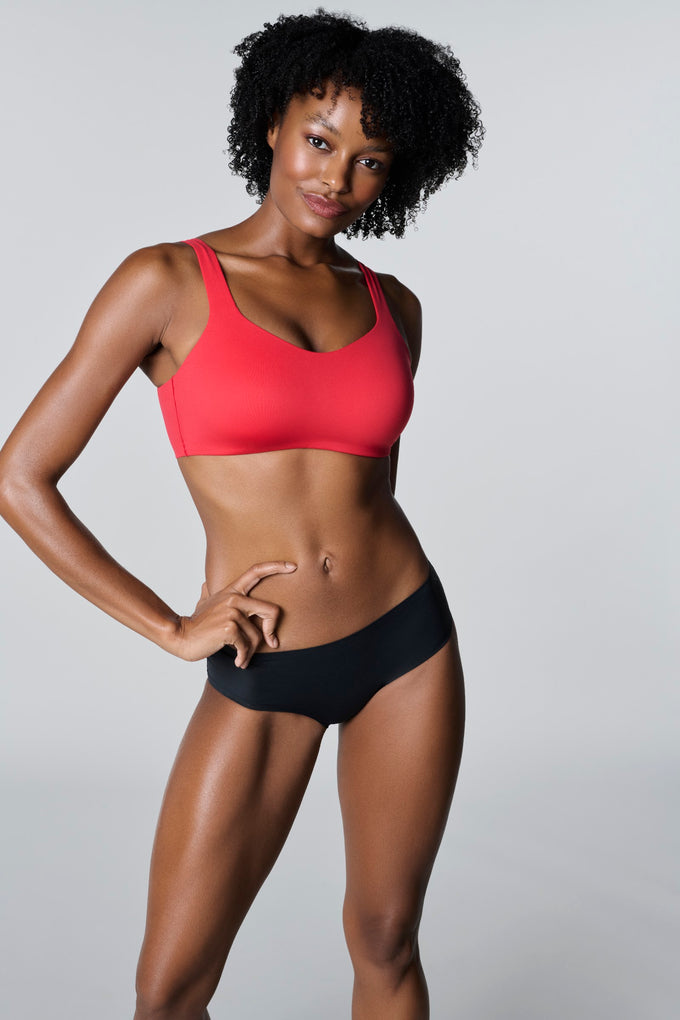
A bralette is a soft, typically unstructured top that offers light to moderate coverage without underwire, foam cups, or molded padding. The category moved out of the lingerie drawer and into everyday wear over the past decade, largely because women got tired of foam shifting, wires digging, and cups that felt more like armor than clothing.
Classic bralettes are made from stretch lace, cotton, or mesh. Minimal hardware, no underwire channel, and either a pullover or simple clasp closure. The traditional tradeoff for that comfort has been limited support — which is why bralettes developed a reputation as a style choice for smaller busts rather than a functional daily option.
That reputation is changing. Newer constructions use bonded support panels and engineered mesh interiors to deliver real hold without foam or wire, which closes much of the support gap that used to separate bralettes from structured bras.
What Makes a Traditional Bra Different
A traditional bra is built around structure. Underwire shapes the cup, foam or molded padding adds projection and coverage, and a multi-hook band provides adjustable tension. The engineering is designed to lift and separate — and for decades, it was the default assumption for anyone who wanted real support.
The downsides are well-documented. Underwire digs into the ribcage during long wear, especially when seated. Foam traps heat and moisture. Removable pads shift out of position and create uneven lines under fitted tops. And a care label that says hand-wash only means the bra that cost $70 gets treated more carefully than everything else in your laundry — which is its own kind of inconvenience.
Traditional bras still make sense in specific situations. They're just not the automatic best choice for daily wear that the category long assumed itself to be.
The Real Differences Side by Side
Here's where the two categories actually diverge, beyond the obvious wire question.
Support and Structure
Traditional bras win on raw lift and projection, particularly for larger busts. The underwire and molded cup create a defined shape that soft constructions can't always match. When you need maximum projection for a specific outfit or occasion, a structured bra is still the more reliable tool.
Bralettes have closed the gap considerably with bonded support technology. A well-engineered wire-free bra — firm band, mesh interior that holds its shape — can carry you through a full workday without issue. The difference shows up most at larger cup sizes, where bonded support alone may not deliver the same lift as underwire.
Comfort Over Time
This is where bralettes pull ahead for most wearers. Without a wire pressing into your ribcage, you can sit, bend, and move without a pressure point that builds over hours. Foam-free means no heat trapping. No removable pads means nothing shifting into an awkward position by noon.
If your primary goal is a bra you can put on at 7am and forget about until 10pm, soft construction wins almost every time.
Washability and Care
Traditional bras with foam cups and underwire typically require hand-washing, or at minimum a mesh laundry bag and a delicate cycle. The wire can warp, the foam can compress, and the fabric can snag. That's a lot of maintenance for something you wear every day.
Bralettes — especially those built from quick-drying mesh fabrics — are generally much easier to care for. The best wire-free bras are fully machine-washable and dryer-safe, meaning they fit into your actual laundry routine rather than requiring a separate process.
Silhouette and Versatility
Traditional bras create a specific, projected shape. Useful under certain tops, but it can look heavy or obvious under lightweight fabrics. Bralettes tend to produce a softer, more natural line — better under fitted knits, sheer layers, and activewear.
Racerback silhouettes work under tank tops and athletic cuts. Plunge styles disappear under deep-V necklines. A well-designed bralette line often covers more outfit territory than a single structured bra can.
When a Traditional Bra Is Still the Better Choice
There are situations where structure genuinely serves you better.
Larger bust sizes seeking maximum lift. Bonded support has improved, but underwire still provides more mechanical lift at larger cup sizes. If you're a DD or above and need a specific lifted shape for a formal occasion, a structured bra may be the more practical tool for that moment.
Specific outfit requirements. A strapless structured bra under a formal gown is doing a different job than your everyday bra. When the garment demands a precise silhouette, structure is the right call.
High-impact sport. A dedicated sports bra with compression or encapsulation is built for movement in a way that a daily-wear bralette simply isn't. That's a different category entirely.
Outside of those scenarios, the case for defaulting to underwire every day is weaker than it used to be.
When a Bralette Is the Smarter Daily Choice
For most women wearing a bra through a standard workday, the bralette category now delivers enough support to make the wire optional — not necessary.
You're on your feet or at a desk for eight or more hours. Underwire that feels fine at 9am tends to dig by 3pm. A wire-free construction with a supportive band removes that variable entirely.
You want one bra that works across multiple contexts. A quick-dry mesh bralette can go from a morning workout to a workday to an evening out without feeling wrong for any of them. Some wire-free styles are even built for sweat and swim, which extends their range further.
You're tired of foam shifting or trapping heat. Foam-free, pad-free construction is a genuine improvement for anyone who's spent time adjusting a cup that migrated during the day. No foam means no migration. No pad means no heat pocket.
You want to throw your bra in the dryer. This sounds minor until you've hand-washed a $70 bra for two years. Machine-washable, dryer-safe construction is a real quality-of-life upgrade for something you wear every single day.
What to Look for in a Wire-Free Bra That Actually Supports
The category ranges from decorative lace triangles with no functional support to engineered wire-free bras with bonded panels and mesh interiors built for all-day wear. Here's what separates the latter from the former.
Bonded support panels. Look for construction that bonds the support layer directly to the fabric rather than inserting a removable pad. This keeps the structure in place through washing and wearing.
A supportive band. Most of a bra's support comes from the band, not the cups. A wire-free bra needs a band that holds firm without stretching out after a few wears.
Breathable fabric construction. A mesh interior that allows airflow makes a real difference in comfort over long wear periods, especially in warmer months or during activity.
Machine-washable and dryer-safe construction. If the care label says hand-wash only, you're committing to a maintenance routine most people won't sustain. Dryer-safe construction means the bra fits into your real life.
Consistent sizing. Fit complaints are the most common issue with wire-free bras. Look for brands with verified review volume across multiple sizes before committing.
How Huug Approaches the Wire-Free Category
Huug builds its entire bra line around four decisions that address the most common complaints about both traditional bras and basic bralettes: no underwire, no foam, no removable pads, and machine-washable dryer-safe construction. The EnMeshed Tech breathable mesh interior provides airflow without sacrificing structure, and bonded support replaces the underwire channel without creating a new pressure point.
The Daily Embrace has accumulated 1,522 on-site reviews at 4.9 stars. The Daily Racerback has 923 on-site reviews at 4.9 stars. Ratings across the full line run 4.7 to 4.9 stars.
Silhouettes include the Daily Embrace, Daily Embrace Adjustable, Daily Racerback, Daily Scoop, and Invisible Plunge — each designed for a different neckline and activity level. Bras are priced at approximately $68, with a Buy 3 Bras Get 1 Free promotion available using code FREEHUUG. First-time buyers can get 20% off their first order through email sign-up.
The quick-dry fabric construction also makes these bras suitable for sweat and swim, which extends their usefulness well beyond standard daily wear. Here's what actually determines how fast a bra dries, since the mechanism matters more than the marketing claim.
Making the Decision for Your Drawer
The honest answer to "bralette vs bra" is that the question itself has shifted. The traditional bra's structural advantages still matter in specific contexts, but for everyday wear, a well-engineered wire-free bra now covers most of what a structured bra does — without the foam, the wire, and the hand-wash-only care routine.
If you spend most of your day in situations that don't require maximum lift or a specific projected silhouette, a supportive wire-free bra with breathable construction and dryer-safe washability is almost certainly the more practical daily choice.
The goal is a bra you can wear all day, wash without a second thought, and reach for again tomorrow. That's a solvable problem.
Frequently Asked Questions
Is a bralette the same as a wire-free bra?
Not exactly. A bralette is a style category defined by soft, unstructured construction, while wire-free simply means no underwire. Some wire-free bras use bonded support panels, engineered mesh, and structured bands to provide significantly more support than a basic bralette. The terms overlap but aren't interchangeable.
Can a bralette provide enough support for everyday wear?
For many body types and cup sizes, yes. Modern wire-free bras with bonded support and firm bands provide all-day hold without underwire. The support gap between bralettes and traditional bras has narrowed considerably with better construction. Larger bust sizes may still prefer underwire for maximum lift in certain situations.
Are bralettes better for your body than underwire bras?
There's no universal answer, but many women find wire-free construction more comfortable over long wear periods because it eliminates the pressure point that underwire creates against the ribcage. Comfort over time is a meaningful factor in what's "better" for your body day to day.
Can you put bralettes in the dryer?
It depends on the construction. Basic lace bralettes are often delicate and should be air-dried. Wire-free bras made from quick-dry mesh with bonded construction are sometimes explicitly dryer-safe — which is a meaningful differentiator worth looking for when you shop. Always check the care label.
What's the difference between a bralette and a sports bra?
A sports bra is engineered for movement, using compression or encapsulation to minimize bounce during exercise. A bralette is designed for everyday wear and comfort. Some wire-free bras with quick-dry fabric bridge the gap for low-impact activity, but a dedicated sports bra is still the right choice for high-impact exercise.
How do I know if a wire-free bra will fit me correctly?
Look for brands with verified review volume across your size range, clear size guides, and consistent feedback about fit. Sizing complaints are common in the wire-free category, so review depth matters more than star ratings alone. Brands that publish detailed fit guides tend to have better size consistency across their line.
Is it worth spending $60 to $70 on a wire-free bra?
If you're wearing it daily, yes. A well-constructed wire-free bra at that price point typically uses better materials, holds its shape through repeated washing, and lasts significantly longer than a cheaper alternative. The cost-per-wear math usually favors investing in a bra you'll actually reach for every day.
The right bra is the one that fits your body, suits your day, and doesn't require you to think about it once it's on. For most people, that description fits a well-made wire-free bra more closely than it fits a traditional structured one.